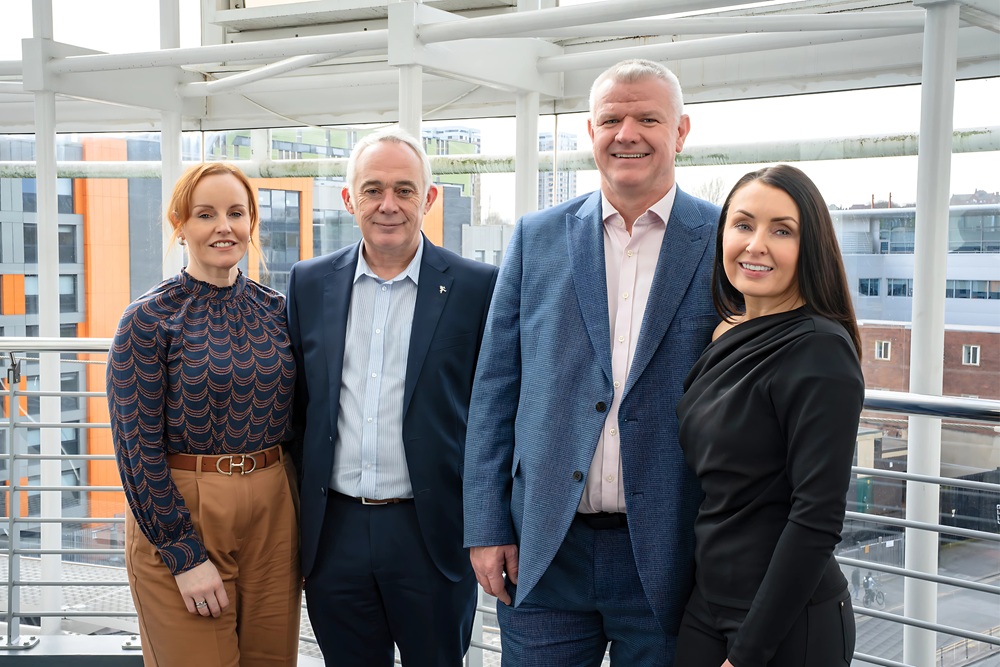

You started your career as a research scientist at IBM’s Silicon Valley Labs. How did that foundational experience shape your perspective on enterprise technology?
The work I was doing was on a system called Parallel Sysplex, IBM’s multiplatform mainframe system designed for large companies and government applications. They used Parallel Sysplex for complex banking applications, so there were a lot of big data use cases. The key words are big data – I was working on R&D that focused on processing large volumes of data, which was really a precursor to what we now call AI. This was back in 1998, and even then we were thinking about concepts that today are central to AI. The only difference was that systems were so expensive that only a few companies could afford them. Now, AI has become democratised. The same expertise I was applying back then is now being used in a much broader context.
You’ve led teams at Oracle and Salesforce. How did those experiences influence your approach to building RocketPhone?
There’s a big difference between leading people in large companies and leading them in smaller startups. In larger organisations, leadership tends to be more hands-off, you set objectives, keep the team aligned with corporate goals and focus on best practices. It’s much more operational. But in a smaller company, you have to set aside some of those big-company lessons, because it becomes all about purpose. People join small companies because they believe in what you’re building. At RocketPhone, it’s about getting the best out of people by understanding their purpose, why they want to be here, what motivates them and what they thrive on. It’s crucial to know what each person can offer. One of the biggest things I focus on is eliminating politics – there’s no room for it in a small team. I’ve seen a lot of laziness and unnecessary delegation in larger companies. The best leaders are the ones who step onto the battlefield with their teams. As companies grow, they become more driven by spreadsheets and less by human insight. In a small company, our strength comes directly from our people and what they contribute.
What are the biggest challenges when introducing AI-native platforms into large enterprise ecosystems?
The biggest challenge is the data, it’s often incomplete or inconsistent, no matter how advanced the AI is. This may improve over time, but it’s still unclear whether AI will simply standardise how people view data or actually correct bad data at the source. In enterprise environments, AI can’t exist in isolation, it has to integrate with existing systems. With the RocketPhone platform, we handle the detection ourselves, identifying things like a sales lead, a complaint or a compliance risk in real time. Then, based on what we detect, we can instruct third-party systems like Salesforce or Zendesk to take the appropriate action, for example, creating and assigning a new sales opportunity to a specific rep or opening a support ticket automatically. Every large enterprise already has established systems in place, so it’s important that AI platforms like ours are able to work seamlessly within and alongside those ecosystems.
Another major challenge is adoption. Technology in general struggles with this, and in my experience, end-users need to see that AI is an enhancer rather than a job stealer. There’s a common fear that AI will replace people and yes, in some cases, that can happen, but for the most part, AI is about removing the mundane tasks that make people dread coming to work. Helping end-users understand and embrace that is key.
As someone who’s sold startups to giants like Oracle, what have you learned about building companies that are both innovative and acquisition-ready?
One thing I’ve learned is that there’s often a bubble inside big corporations, where the information you receive inflates your ego and makes you believe your company is the best place on earth. It’s important to go through the learning process yourself and not get trapped in that mindset. You need to have bold, even crazy ideas and figure out which of them will actually have a market impact and solve real problems you’ve experienced firsthand. You have to be willing to take risks and try things outside the norm. You can be a manager without being an innovator, but to build something truly valuable, you have to push boundaries and experiment.
What inspired the creation of RocketPhone.ai, and what specific gap were you aiming to fill in the enterprise CRM market?
The idea for RocketPhone really came from a frustration I had while working at Salesforce. Voice communication – arguably the most human and impactful channel in business had barely evolved in decades. Meanwhile, everything else in enterprise tech was racing ahead. So I started asking, why hasn’t anyone rethought this properly?
We saw a massive opportunity to change that by combining declining costs of compute and bandwidth with advances in AI. The goal was simple: turn conversations into real, actionable insights. Not just for sales, but across the whole business. CRMs were always good at recording what happened after the fact what we wanted was something that could understand what’s happening in the moment, and help people perform better right then and there.
RocketPhone was born out of that vision, to build a real-time conversation intelligence layer that could sit natively inside enterprise environments, without all the usual bloat or friction.
Can you explain the “conversation processing system” in simple terms and how it differs from traditional CRM tools?
Think of it this way: traditional CRM tools are basically digital filing cabinets. They’re useful, but they rely on people to manually input information after calls happen. That’s slow, often incomplete and prone to human error.
Most CRMs are just databases, they rely on people to remember to type things in after the fact. It’s a manual process that breaks the moment someone forgets to log a note or misses a follow-up.
RocketPhone flips that model. Our Conversation Processing System listens to live conversations, sales calls, support chats, internal meetings and identifies what actually matters to your business in real time. It doesn’t just summarise; it decides what needs to happen next and makes it happen. That might be creating and assigning a new sales opportunity, opening a support ticket or triggering a compliance review, whatever your business needs.
It’s not an AI notetaker – it’s a real-time orchestration system that observes, interprets, decides and acts. And it does all of that in seconds. That’s what turns conversations from static data into dynamic value. We’re not here to create more dashboards; we’re here to help businesses act faster, close gaps and perform better where it matters most.
Your survey revealed UK businesses lost over £127 million due to missed sales opportunities. Why is this such a widespread problem?
It’s widespread because too many businesses are still operating in the dark when it comes to understanding their customer conversations. Despite the growing volume of voice and digital interactions, most organisations rely solely on CRM systems filled with static, manually entered data and even that’s often incomplete or delayed.
Sales teams are spending over half their day on admin instead of selling, and nearly two-thirds of sales managers admit their tech stack is ineffective. That’s time lost and insights missed. Without real-time visibility into what customers are saying, their objections, their buying signals, even their frustrations businesses are making decisions based purely on guessing.
The £127 million figure is just the tip of the iceberg. What we’re really seeing is a systemic failure to capture and action the value locked inside every conversation. Until businesses close that gap, missed opportunities will continue to drain revenue and erode customer trust.
How does RocketPhone.ai provide real-time value versus the retrospective approach taken by competitors?
Most enterprise tools today take a retrospective approach to insight, they analyse calls after the conversation is over. This means you only learn what went wrong once the deal is lost, the customer’s walked away or the damage is done. It’s reactive, disconnected and ultimately very costly.
With RocketPhone, we flipped that on its head. Our platform listens in real time and acts in the moment. Whether it’s sales, support or compliance, we’re delivering actionable insight while the conversation is still happening. Reps get nudges during the call to shift their pitch, support agents are guided towards better outcomes, and risk alerts are flagged before problems escalate.
This isn’t theoretical – it’s quantifiable. Our research shows 63% of sales leaders say disconnected tools have directly cost them deals. In the UK alone, businesses lose over £127 million every year from missed opportunities in voice channels. We’re solving that by turning every call into a live data stream that feeds directly into business systems.
What’s your long-term vision for RocketPhone.ai and how do you see enterprise AI evolving in the next five years?
Our long-term vision for RocketPhone is to become the intelligence layer for all voice interactions in enterprise. Right now, businesses are sitting on a goldmine of untapped data, their daily conversations with customers. But most of that insight is lost the moment the call ends.
We’re building a platform that doesn’t just transcribe or record. It listens, learns and helps teams act. Whether it’s sales, support or compliance, our goal is to enable real-time, AI-driven insights that improve performance and outcomes across the business. In five years, I believe every enterprise will treat voice data as strategically as they do structured data in CRMs.
As for enterprise AI more broadly, I see three big shifts coming. First, AI will become deeply embedded into core business systems not as add-ons, but as foundational components. Second, trust and transparency will be non-negotiable. Enterprises will demand AI that can explain its reasoning, not just deliver black-box answers. And third, we’ll move from AI as a tool for efficiency to AI as a driver of growth helping businesses spot opportunities, personalise at scale and make better decisions.
What practical advice would you give to sales leaders and revenue teams looking to reduce data gaps and boost performance?
For sales leaders the key is to focus on making conversations actionable in real time rather than relying purely on retrospective data. From what we’ve seen at RocketPhone, teams spend over half their day on admin, which takes precious time away from selling and limits the quality of data entered into CRMs. So, the first step is to reduce manual tasks by adopting tools that integrate seamlessly with your existing systems and capture insights directly from live interactions.
It’s also important to ensure your tech stack isn’t siloed – disconnected platforms lead to missed opportunities and poor forecasting, something 63% of sales managers in our research acknowledged. Giving your teams better visibility into conversation history and real-time nudges during calls can help them adapt quickly, improving customer experience and deal outcomes.
Finally, focus on training and culture. Equip your teams with the right information and encourage continuous feedback to refine processes and make it more seamless for the future. Creating an environment where data is seen as a vital asset, not just an afterthought, makes a big difference in driving performance and customer trust over the long term.